
AI in 2026: What to Expect
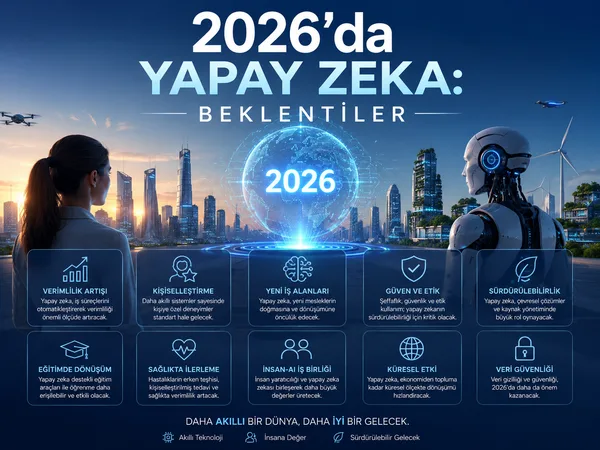
We are now deep into the third major phase of the modern AI era. The first phase, which ran roughly from 2020 through 2023, was defined by the sudden arrival of capable large language models (LLMs) and the public's dramatic introduction to systems like GPT-3.5, GPT-4, and their contemporaries. The second phase, spanning 2024 and 2025, was characterized by rapid iteration, competitive pressure, an explosion of open-source alternatives, and the beginnings of serious regulatory attention.
As we look toward 2026, the picture that emerges is not one of a single breakthrough but rather of a broad, maturing ecosystem. The technology is becoming simultaneously more capable and more mundane — embedding itself into tools, workflows, and infrastructure in ways that are less visible but arguably more consequential than any single chatbot demo.
The Foundation Model Landscape: Scaling Hits Limits, Efficiency Takes Over
For much of the 2020s, the dominant narrative in AI research was simple: scale equals capability. Bigger models trained on more data with more compute produced better results, seemingly without bound. That story has been showing signs of strain since late 2023, and by 2026, it is widely accepted that the era of brute-force scaling has given way to something more nuanced.
Diminishing Returns on Pretraining
The evidence that simply scaling up model size and dataset volume yields diminishing returns has been accumulating for several years. Frontier labs have increasingly turned their attention to post-training techniques — reinforcement learning from human feedback (RLHF), constitutional AI, and various forms of self-play and synthetic data generation — as the primary drivers of capability gains. OpenAI's o-series models and Google's Gemini-thinking variants demonstrated that inference-time compute (sometimes called "test-time scaling") could unlock significant reasoning improvements without increasing model parameter counts.
By 2026, the industry consensus is that the frontier of foundation model development has shifted from "how big can we make it" to "how efficiently can we use what we have." Mixture-of-experts (MoE) architectures, which activate only a subset of parameters for any given input, are now standard across virtually all production models. Quantization techniques — reducing the precision of model weights from 16-bit to 8-bit or even 4-bit — have become so effective that the gap between a quantized model and its full-precision counterpart is often negligible in practice while offering 4x or greater reductions in memory footprint.
Specialization Over Generalization
Another clear trend solidifying by 2026 is the move away from general-purpose models as the universal solution. While large foundation models continue to exist and improve, an increasing share of production deployments uses specialized models fine-tuned for specific domains: legal document analysis, medical code generation, financial forecasting, software development, and scientific research. These specialized models are often dramatically smaller — 7 billion to 30 billion parameters rather than 100 billion or more — and can run on far more modest hardware while matching or exceeding the performance of much larger general models on their target tasks.
This trend has significant implications for cost, accessibility, and privacy. A specialized model running on a local server — or even on a laptop — eliminates the need for API calls to cloud providers, reducing operational costs and keeping sensitive data on-premises.
Regulation and Policy: The EU AI Act Takes Effect
Perhaps the most consequential policy development of 2025 and 2026 is the phased implementation of the European Union's Artificial Intelligence Act. The AI Act, which was formally adopted in 2024 following extensive negotiations, takes a risk-based approach to regulation, categorizing AI systems into minimal, limited, high, and unacceptable risk tiers.
The EU AI Act in Practice
By 2026, the most significant provisions of the AI Act have come into force. The bans on "unacceptable risk" AI systems — including social scoring systems, real-time biometric surveillance in public spaces (with limited exceptions for law enforcement), and manipulative AI practices — are now legally enforceable across EU member states. Requirements for "high-risk" AI systems, which include many applications in healthcare, employment, law enforcement, education, and critical infrastructure, are also being implemented.
The practical impact on companies developing or deploying AI in Europe has been substantial. Organizations classified as deploying high-risk AI systems must now maintain human oversight mechanisms, ensure appropriate technical documentation, and implement risk management procedures throughout the system's lifecycle. For many companies, this has meant hiring dedicated AI compliance officers and investing in governance tooling — a small but growing ecosystem of startups has emerged to help organizations navigate these requirements.
Importantly, the AI Act's approach has had ripple effects beyond Europe. Companies that operate globally, including major US-based AI developers, have largely chosen to implement the Act's requirements across their entire operations rather than maintaining separate compliance regimes for EU and non-EU markets. This "Brussels effect" — where EU regulation effectively sets global standards — has been observed previously in data protection (GDPR) and digital markets regulation.
United States: Fragmented and Sectoral
In contrast to the EU's comprehensive framework, the United States has pursued a more fragmented, sectoral approach. The Biden administration's 2023 Executive Order on AI was followed by a series of agency-specific guidance documents and voluntary commitments from major AI developers. As of 2026, there is no comprehensive federal AI legislation in the United States, despite continued congressional hearings and proposals.
Instead, regulation has emerged piecemeal. The Federal Trade Commission has been active in pursuing enforcement actions against deceptive AI practices, including cases involving misleading claims about AI capabilities (so-called "AI washing"). The National Institute of Standards and Technology (NIST) has released updated versions of its AI Risk Management Framework, which has become a de facto standard for organizations seeking to demonstrate responsible AI practices. Several states have passed their own AI legislation, particularly around algorithmic transparency in hiring, facial recognition, and AI-generated political advertising.
This fragmented approach has created compliance challenges for companies operating across multiple jurisdictions, with some observers calling for a single federal framework to harmonize requirements.
International Coordination and the Compute Governance Debate
One area where international coordination has advanced is in the governance of compute resources. The idea that access to large-scale computing infrastructure is a bottleneck for frontier AI development has led to discussions about "compute governance" — mechanisms to track and, where appropriate, restrict access to the massive clusters needed to train the most capable models. International agreements on reporting requirements for large training runs have been established through frameworks like the Bletchley Declaration and subsequent summits, though enforcement mechanisms remain limited.
Enterprise AI: From Experimentation to Embedded Infrastructure
The most significant shift in enterprise AI from 2024 to 2026 is the transition from experimentation to production deployment at scale. Early 2024 saw widespread pilot projects and proof-of-concept implementations across most large organizations. By 2026, AI capabilities are increasingly embedded in the core software infrastructure that enterprises use every day — CRM systems, ERP platforms, customer service software, developer tooling, and data analytics products.
Agentic Workflows and Task Automation
One of the most hyped — and genuinely consequential — developments in enterprise AI is the rise of agentic systems. Rather than responding to individual prompts, these systems can execute multi-step workflows autonomously: reviewing incoming emails, updating database records, generating reports, triggering approval processes, and handing off to human workers when exceptions arise.
The technology to build reliable agentic systems has improved substantially. Frameworks for managing state, tool use, error handling, and human-in-the-loop oversight have matured. However, it is important to distinguish between routine, well-scoped automation tasks and general-purpose autonomous agents. The latter remain firmly in the research domain. What has been deployed successfully in 2025 and 2026 are carefully constrained agents operating within well-defined boundaries — customer service triage, invoice processing, code review triage, and similar applications where the range of possible actions is limited and failure modes are manageable.
Industry estimates from 2025 suggest that organizations that have successfully deployed AI agents for targeted use cases report productivity improvements of 20 to 40 percent for the specific tasks being automated, though these gains do not typically translate directly to overall organizational productivity due to the need for oversight, exception handling, and system integration.
The Data Readiness Challenge
Enterprise adoption has also revealed a persistent bottleneck: data readiness. Many organizations have discovered that their internal data is not in a state suitable for effective AI use — it is siloed across systems, poorly documented, inconsistent in format, or contains quality issues. The adage "garbage in, garbage out" has been rediscovered with a vengeance. A substantial industry has emerged around data preparation, cleaning, labeling, and pipeline construction specifically for AI applications. By 2026, companies that invested early in data infrastructure are reaping disproportionate benefits compared to those that rushed directly to model deployment.
AI in Healthcare, Education, and Key Sectors
Healthcare: Clinical Decision Support Matures
In healthcare, 2026 represents a transition from pilot programs to meaningful clinical deployment. The use of AI for medical imaging analysis — radiology, pathology, dermatology — is the most mature application, with dozens of FDA-cleared or CE-marked devices in clinical use. These systems are increasingly used not as autonomous diagnosticians but as assistive tools that flag potential findings for human review, improving radiologists' efficiency and reducing fatigue-related errors.
Large language models have found niche but valuable applications in clinical documentation. AI scribes that generate clinical notes from recorded patient encounters have become widely adopted in US healthcare systems, reducing physicians' administrative burden. Estimates suggest these tools save clinicians 10 to 15 minutes per patient encounter — a significant productivity gain in a resource-constrained system.
More ambitious applications, such as AI-assisted drug discovery and clinical trial matching, continue to advance but have not yet transformed pharmaceutical development in the sweeping way some early predictions suggested. Several AI-discovered drug candidates have entered clinical trials, and a small number have advanced to Phase II, but the 10- to 15-year drug development timeline means that the impact of AI on approved therapies will not be fully realized until the 2030s at the earliest.
Education: Personalized Tutoring at Scale
Education technology has seen meaningful deployment of AI-powered tutoring systems that adapt to individual students' learning pace and style. Systems based on large language models can provide explanations, generate practice problems, give feedback on writing, and answer questions across a wide range of subjects. The quality of these interactions varies considerably, and concerns about accuracy, age-appropriateness, and over-reliance on AI tools remain active areas of debate.
The most effective deployments have been in structured, well-defined contexts: language learning, mathematics practice, and writing support. Less structured applications — open-ended tutoring, conceptual understanding in complex domains — continue to require substantial human oversight. The emerging consensus among education researchers is that AI tools are most effective when used as part of a blended learning model that combines AI-powered practice and feedback with human instruction for conceptual guidance, social-emotional support, and nuanced discussion.
Science and Research: AI as a Research Tool
By 2026, AI tools have become an integral part of the scientific research workflow for many disciplines. AlphaFold's impact on protein structure prediction, which was recognized with a Nobel Prize in 2024, is one of the most celebrated examples, but the pattern extends across biology, chemistry, materials science, and physics. Machine learning models are widely used for predicting molecular properties, accelerating simulation workflows, and analyzing experimental data. These tools are augmenting — not replacing — human researchers, substantially accelerating certain parts of the research pipeline.
Edge AI and On-Device Intelligence
One of the most consequential — and relatively under-hyped — developments of 2025 and 2026 is the rapid advance of on-device AI. The combination of specialized neural processing units (NPUs) in consumer hardware, improved model efficiency through quantization and pruning, and the development of smaller but capable model architectures has made it possible to run sophisticated AI models directly on phones, laptops, and edge devices without cloud connectivity.
Apple's introduction of on-device AI capabilities in its 2024 iPhone lineup, Google's continued development of on-device models for Pixel devices, and Qualcomm's NPU-equipped Snapdragon processors have made local AI processing a standard feature of premium smartphones. By 2026, this capability has trickled down to mid-range devices. Use cases include real-time translation, photo editing, speech-to-text, text summarization, and intelligent notification triage — all running locally with low latency and complete privacy.
In industrial settings, edge AI is being deployed for predictive maintenance, quality inspection, and process optimization in manufacturing environments where sending data to the cloud is impractical due to latency, bandwidth, or reliability constraints. The industrial edge AI market has grown substantially, driven by the availability of purpose-built hardware from vendors like NVIDIA (Jetson), Intel (Movidius), and a growing ecosystem of startups.
AI Safety, Alignment, and Ethics
The AI safety landscape has evolved significantly. The release of increasingly capable systems has sharpened the debate between those who argue that catastrophic risks from advanced AI warrant urgent intervention and those who contend that more near-term, concrete harms — bias, discrimination, misinformation, privacy violations, labor displacement — deserve more immediate attention. By 2026, this debate is no longer purely academic, as regulatory frameworks and industry practices have begun to incorporate elements of both perspectives.
Technical Approaches to Safety
On the technical side, several approaches to AI safety have matured. Red-teaming — systematic adversarial testing of AI systems for dangerous or undesirable behaviors — has become standard practice for frontier model releases, with many organizations publishing red-teaming results (in varying levels of detail) alongside new models. Constitutional AI and similar training-time approaches have been refined, though they remain imperfect solutions to the fundamental challenge of aligning systems that can exhibit unpredictable behavior in edge cases.
Watermarking and provenance techniques for AI-generated content have improved but remain a cat-and-mouse game with those seeking to remove or circumvent them. International standards for AI content labeling are being discussed but have not been universally adopted.
Bias, Fairness, and Representation
Concerns about bias and representation in AI systems have not been fully resolved. While significant progress has been made in reducing overt demographic bias in major language models, more subtle forms of bias — particularly those related to dialect, socioeconomic status, and intersectional identities — remain challenging to measure and mitigate. The field has moved toward more rigorous evaluation frameworks that test for a broader range of potential harms, but the gap between evaluation and real-world impact persists.
The Evolving Job Market
The impact of AI on employment continues to be one of the most discussed and least settled questions in the technology landscape. By 2026, it is clear that AI is not leading to the wholesale elimination of jobs that some early predictions suggested, nor is its impact negligible.
The most observable effect is task-level automation rather than job-level replacement. Many workers — particularly in knowledge-intensive fields like software development, writing, data analysis, customer service, and legal work — report that AI tools have changed the nature of their work by automating routine tasks while requiring new skills related to AI tool use, prompt engineering, output verification, and exception handling.
For software developers specifically, AI code generation tools have become standard parts of the development workflow. By 2026, industry surveys consistently show that a majority of professional developers use AI-assisted coding tools regularly. The effect has been to increase individual productivity for certain categories of work — boilerplate code generation, test writing, documentation, and simple bug fixes — while shifting developer time toward architecture, design, code review, and complex problem-solving. Junior developers face a changing landscape where some of the routine learning opportunities that traditionally built expertise are now automated, raising questions about skills development pipelines.
New job categories have emerged, including prompt engineers (though this title is increasingly being absorbed into broader roles), AI ethics specialists, LLMOps engineers, and AI compliance officers. These roles are growing but represent a small fraction of overall employment.
Open-Source vs. Closed-Source: A Maturing Ecosystem
The dynamics between open and closed AI models have shifted substantially. The release of powerful open-weight models — Meta's Llama family, Mistral's models, Qwen from Alibaba, and various others — has created a vibrant ecosystem of community-driven development, fine-tuning, and deployment. By 2026, the capability gap between the best open-weight models and proprietary frontier models has narrowed considerably for many tasks, though proprietary models still maintain advantages at the extreme frontier of reasoning, long-context understanding, and multimodal integration.
The open-source ecosystem has also been a source of innovation in areas like model efficiency, fine-tuning techniques (LoRA and its many variants remain popular), and deployment tooling. However, the term "open source" in the AI context remains contested — many models released with permissive licenses do not include training data, training code, or sufficient documentation to be truly reproducible, and the distinction between "open weight" and "open source" continues to be debated.
For enterprises, the availability of capable open-weight models has been a significant development, enabling on-premises deployment, customization, and the ability to avoid vendor lock-in. However, the total cost of ownership for running large models in-house — including hardware, infrastructure, and expertise — means that many organizations still find managed API services more cost-effective for many use cases.
Hardware: The Silicon Arms Race Continues
The hardware landscape for AI computing in 2026 is characterized by continued innovation and intense competition, but also by persistent supply constraints for the most advanced components.
NVIDIA remains the dominant supplier of AI training hardware, with its Blackwell architecture (and the subsequently announced Rubin architecture) shipping in volume. However, competition is intensifying. AMD's MI-series accelerators have gained meaningful market share, particularly in price-sensitive deployments and in organizations seeking to diversify their hardware supply chains. Intel's Gaudi accelerators and Microsoft's in-house Maia chips have also entered the market, though their market share remains small relative to the incumbents.
The most significant structural development in AI hardware is the proliferation of specialized inference accelerators. As AI workloads shift from training (which remains concentrated in a relatively small number of hyperscale data centers) to inference (which is distributed across thousands of organizations and edge devices), the hardware market is diversifying. Inference-optimized chips from companies like Groq, Cerebras, and various startups are finding niche applications in latency-sensitive deployments.
On the consumer side, the inclusion of NPUs in virtually all new laptops, smartphones, and tablets means that local AI inference capability has become a standard feature rather than a differentiator. The practical impact of this varies widely depending on software ecosystem integration — Apple's tight hardware-software integration has enabled a more seamless experience, while the Windows PC ecosystem has been slower to deliver compelling on-device AI features despite hardware readiness.
Multimodal AI: Beyond Text
Multimodal AI systems — models that can process and generate across text, images, audio, and video — have advanced significantly. By 2026, most frontier models accept multiple input modalities natively. The ability to upload images, documents, audio recordings, and even short video clips as input to language models has become standard in both proprietary and open-weight offerings.
Video generation has seen dramatic quality improvements, with systems capable of producing increasingly realistic short-form video from text prompts. This has opened up new applications in creative production, advertising, and content creation, while also raising concerns about the potential for realistic video-based disinformation. Detection of AI-generated video has improved but remains imperfect, and policymakers are grappling with the implications for electoral integrity, evidence in legal proceedings, and trust in recorded media.
Speech interaction has become much more natural, with end-to-end voice models that handle prosody, emotion, and conversational dynamics far better than the text-to-speech pipeline approaches common in earlier systems. Real-time voice conversation with AI systems has become a standard interface modality alongside text.
The Challenges Ahead
For all the progress, significant challenges remain. Reliability is perhaps the most persistent technical challenge — even the most capable models continue to produce plausible-sounding errors, and the problem of hallucination (confidently generating false information) has been reduced but not eliminated. This fundamentally limits the domains in which AI can be deployed without human oversight.
Energy consumption of AI workloads has become an increasingly visible concern. While per-inference energy costs have dropped dramatically through hardware improvements and model efficiency, the overall energy footprint of the AI industry continues to grow as deployment scales. Major AI companies have made commitments to carbon-neutral or carbon-negative operations, but the net environmental impact of expanding AI infrastructure remains a subject of active study and debate.
The concentration of frontier AI capability in a small number of well-resourced organizations — both corporate and state-backed — raises questions about power, access, and governance that have not been adequately addressed. While open-weight models and cloud-based API access have democratized AI usage to some degree, the ability to train frontier models remains limited to a handful of entities with access to enormous capital, compute, and talent.
Looking Forward
If the story of 2023 was "AI is here," and the story of 2024 and 2025 was "AI is everywhere," the story of 2026 might be summarized as "AI is infrastructure." The technology is becoming embedded, regulated, and in many ways, mundane. This normalization brings both benefits and risks: wider access to capable tools, but also the entrenchment of systems whose limitations and failure modes are not fully understood; greater productivity in many domains, but also disruption to labor markets and social institutions; impressive technical capabilities, but also unresolved questions about alignment, safety, and governance.
The coming years will test whether the institutional, regulatory, and technical frameworks being built now are sufficient to manage a technology that continues to advance in capability and expand in reach. The answer, as with most questions about complex technologies in society, will depend less on the technology itself than on the choices we make about how to develop, deploy, and govern it.